Scan the QR code to communicate with the project manager
We are waiting for your voice 24 hours a day on WeChat
Answer questions in this article/Technical consultation/Operation consultation/Technical advice/Internet communication

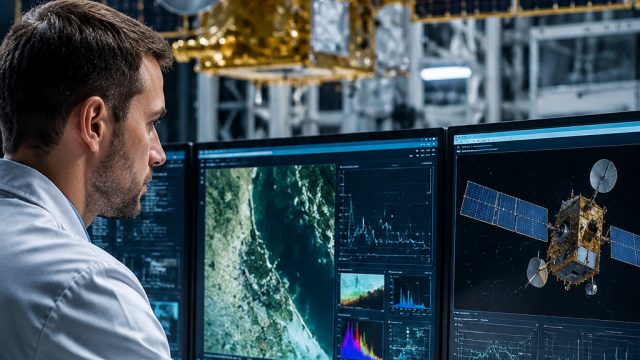
In the rapidly evolving world of satellite technology, the precision of data collected from these advanced instruments is paramount. This is especially true as researchers increasingly rely on satellite imagery to inform decisions related to climate change, urban planning, and disaster response. The calibration of this imagery ensures the accuracy and consistency of measurements, making it a critical step in the process of transforming raw data into actionable insights.
Calibration refers to the process of correcting and adjusting the values derived from satellite sensors to reflect true measurements. Satellite sensors collect data by capturing light reflected from Earth's surface, but various factors can introduce discrepancies into these readings. Factors such as atmospheric conditions, sensor degradation over time, and variations in light can lead to inaccuracies.
Without proper calibration, satellite data could yield misleading conclusions impacting critical decisions. For instance, in climate research, inaccurately measured temperature or precipitation data can distort our understanding of climate patterns. Similarly, urban planners rely on precise imagery to assess land use and infrastructure needs.
Recent advancements in technology have significantly improved the calibration process of satellite imagery. NASA, for instance, is at the forefront of these innovations, employing sophisticated software and machine learning techniques to enhance data accuracy. Julia Barsi, a notable calibration scientist at NASA, emphasizes that these enhancements are vital for maintaining data integrity, especially as satellite missions expand globally.
Machine learning algorithms are increasingly being utilized to automate and enhance calibration processes. These algorithms can analyze vast datasets quickly, identifying patterns and correcting anomalies more efficiently than traditional methods. This leads to improved accuracy and faster turnaround times for data analysis.
The collaboration between various organizations also plays a crucial role in improving calibration methods. By sharing data and best practices, researchers can develop more effective calibration techniques. This is particularly important as satellite imagery from different sources may need to be integrated for comprehensive analyses.
Despite the advances, challenges remain in the calibration of satellite imagery. One major challenge is ensuring consistency across different satellite platforms. Each satellite may have unique sensor characteristics and may operate under various conditions, leading to potential discrepancies in data interpretation.
Environmental conditions, such as cloud cover and atmospheric interference, can significantly impact the quality of satellite images. For instance, clouds can obscure the surface, leading to incomplete or misleading data. Continuous monitoring and correction mechanisms are essential to address these issues.
Looking forward, the future of satellite calibration seems promising with the potential of emerging technologies. Enhanced algorithms, coupled with increased collaboration between scientists and engineers, can lead to even more refined calibration techniques. This will not only improve the quality of satellite data but also expand its applications in various fields, including agriculture, forestry, and disaster management.
Calibration of satellite imagery is more than a technical necessity; it is a foundation for scientific research and practical applications that affect our daily lives. As we confront global challenges, the need for precise and reliable data is greater than ever. With ongoing innovations and collaborative efforts, the path to achieving optimal satellite imagery calibration is well underway, paving the way for transformative insights that can drive informed decisions for a better future.

We are waiting for your voice 24 hours a day on WeChat
Answer questions in this article/Technical consultation/Operation consultation/Technical advice/Internet communication
WeChat QR code
WeChat QR code
Mobile version official website