Scan the QR code to communicate with the project manager
We are waiting for your voice 24 hours a day on WeChat
Answer questions in this article/Technical consultation/Operation consultation/Technical advice/Internet communication

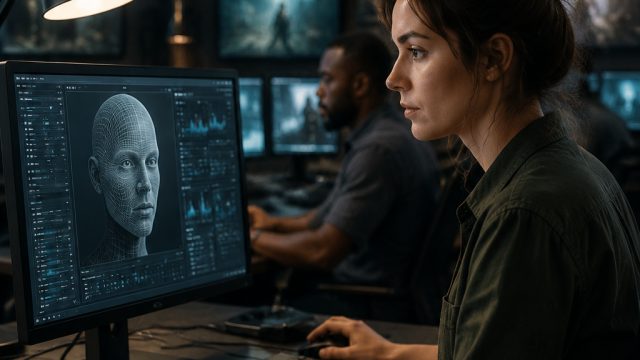
As the entertainment industry grapples with unprecedented shifts in job availability, a notable trend is emerging among Hollywood professionals: the pivot to artificial intelligence (AI) training. This change is not just a response to dwindling opportunities within traditional roles but also a proactive measure to remain relevant in a rapidly evolving landscape influenced by advanced technologies.
In recent years, the integration of AI into various sectors has accelerated dramatically. In Hollywood, where craft and creativity once defined career trajectories, the landscape is transforming. Workers are increasingly finding themselves involved in Reinforcement Learning from Human Feedback (RLHF), a method that is pivotal in refining AI systems. This approach highlights how entertainment professionals are stepping into roles that, while challenging, are critical for the future of content creation and distribution.
The surge in AI applications across industries is well-documented, yet its penetration into the entertainment sector is particularly noteworthy. Many industry veterans are leveraging their storytelling expertise to train AI models, which can substantially enhance the quality of content produced by these systems. By participating in this process, they not only secure their income during lean times but also play a significant role in shaping the future of storytelling.
The entertainment industry is notorious for its fierce competition and, at times, unpredictable landscape. As traditional roles diminish, those who adapt are more likely to thrive. The transition to AI-related roles signifies a broader resilience and a willingness to embrace innovation. Workers are not just waiting for the industry to recover; they are actively participating in its evolution.
For many Hollywood professionals, the shift to AI training offers a unique opportunity to expand their skill sets. The knowledge gained through AI training can be incredibly valuable, providing insights that can enhance their primary crafts in filmmaking, writing, and production. This adaptability could lead to new roles that merge creativity with technology, opening doors to previously unimaginable career paths.
Despite the promising outlook, the road to integration of AI in the entertainment industry is paved with challenges. Concerns about job displacement loom large, as advancements in AI technologies could threaten traditional roles. Yet, those participating in AI training are acutely aware of these risks and are preparing for a future where their skills may be complemented rather than replaced by machines.
As AI becomes a staple in content creation, it is essential to strike a balance between innovation and the rich traditions of filmmaking and storytelling. Hollywood workers are uniquely positioned to guide this integration, using their narrative skills to inform AI development and ensure that technology enhances rather than diminishes the human element of creativity.
The convergence of AI and the entertainment industry marks a critical juncture for Hollywood professionals. By engaging in AI training, they are not only securing their livelihoods but also actively participating in the redefinition of their industry. As AI technologies continue to evolve, those who adapt will not only survive but thrive, paving the way for a future where technology and creativity coexist harmoniously.
The journey ahead may be complex, but for Hollywood workers embracing this shift, the possibilities are limitless. The question remains: how will the stories of tomorrow be told in a landscape increasingly dominated by artificial intelligence?

We are waiting for your voice 24 hours a day on WeChat
Answer questions in this article/Technical consultation/Operation consultation/Technical advice/Internet communication
WeChat QR code
WeChat QR code
Mobile version official website